
Bell RS7 Carbon Helmet Review — Is It Right for Sim Racing?
TL;DR
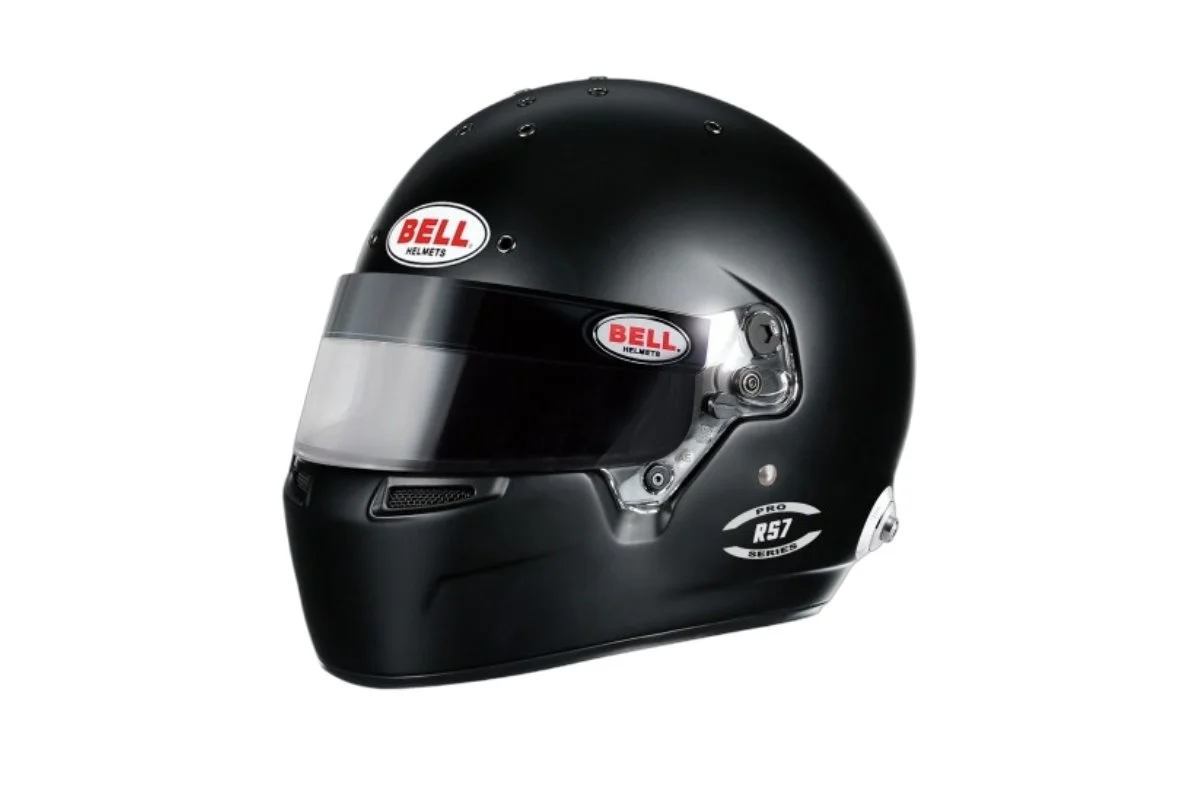
The Bell RS7 Carbon is a professional FIA-certified circuit racing helmet used at the top levels of motorsport worldwide. It is the right choice for sim racers who want the best quality available, minimal compromise on weight and ventilation, and the genuine article — the same helmet real drivers wear. At £1,369 from SimTorque it is a significant purchase. The quality, comfort and prestige are commensurate with the price.
Verdict: 9/10 — The benchmark motorsport helmet for serious sim racers
Table of Contents
1. About Bell Helmets
2. RS7 Carbon specifications
3. First impressions and build quality
4. Fit and comfort for sim racing
5. Ventilation — does it matter for sim racing?
6. Weight — why it matters more than you think
7. RS7 Carbon vs other helmets for sim racing
8. Is it worth £1,369 for sim racing?
9. FAQ
About Bell Helmets
Bell Helmets was founded in 1954 by Roy Richter and is credited with producing the first modern full-face racing helmet. Their products have been worn by Formula 1 world champions, Le Mans winners and drivers across virtually every major motorsport series for over seventy years. The RS7 Carbon is Bell's current flagship circuit racing helmet — the product of seven decades of motorsport safety engineering.
When you are looking at a Bell RS7 Carbon, you are looking at a helmet that the same company produces for professional racing drivers. There is no "sim racing version" — it is simply the helmet that racing drivers use, which happens to be exactly the right choice for sim racers who want the genuine article.
RS7 Carbon Specifications
Specification | Detail
Shell material | Carbon fibre
Certifications | FIA 8859-2015, FIA 8860-2018
Weight | Approximately 1,250g (size M)
Interior | Removable and washable comfort liner
Visor | Injected polycarbonate, anti-scratch
Visor mechanism | Quick-release
HANS device | Compatible
UK price | From £1,369
The dual FIA certification is worth noting. FIA 8859-2015 is the standard for circuit and rally racing. FIA 8860-2018 is a more demanding standard introduced specifically for Formula 1, requiring additional structural performance under high-speed impact conditions. Very few helmets hold both certifications simultaneously. The RS7 Carbon is one of them.
First Impressions and Build Quality
The RS7 Carbon arrives in a padded Bell carry case. Picking it up for the first time, the carbon fibre shell construction is immediately evident — it is noticeably lighter than the fibreglass helmets it competes against at lower price points, and the shell finish is clean and consistent.
The interior comfort liner is dense, well-contoured and feels designed for long-duration wear rather than brief fitting. The chin strap mechanism is robust with a clear, positive connection. The quick-release visor mechanism is smooth and clicks into position with confidence.
Every contact point — the chin bar padding, the cheek pads, the crown liner, the neck roll — suggests a product designed by engineers who understand what happens to a driver's head over a four-hour endurance race. In a sim racing context, the same qualities that make it comfortable for a Le Mans driver make it comfortable for a three-hour iRacing session.
Fit and Comfort for Sim Racing
Racing helmet fit is critical. A helmet that fits correctly sits snugly against the crown and cheeks with no pressure points and no movement when the chin strap is fastened. The RS7 Carbon uses Bell's standard oval head form — appropriate for most head shapes. Those with particularly round or narrow heads may find other manufacturers' fits more comfortable.
For sim racing specifically — where the helmet is worn in a relatively stationary position without the physical demands of a real race — the RS7 Carbon is very comfortable. The chin bar does not interfere with looking down at pedals, the cheek padding provides stable support without pressure, and the weight distribution is balanced enough that fatigue does not build in the neck over a long session.
One practical consideration: the RS7 Carbon does not accommodate a VR headset through the standard visor opening. Sim racers using VR should look at the Stilo ST5 VR, which is specifically designed for VR compatibility.
Ventilation — Does It Matter for Sim Racing?
In a real race car, aerodynamic airflow through the helmet's ventilation system is what cools the driver. The RS7 Carbon's ventilation is designed for that context — it works correctly at racing speeds.
In a sim racing cockpit, there is no airflow. The ventilation system relies entirely on natural convection and any ambient airflow in the room. For short sessions, this is not an issue. For longer sessions in warm rooms, a helmet that traps heat becomes genuinely uncomfortable.
The RS7 Carbon's interior liner is a removable, washable design — important for hygiene during regular long sessions. The helmet's build quality means the internal environment is more comfortable than cheaper helmets even without active airflow, but sim racers who run long sessions in warm environments may want to consider a small desk fan directed at the helmet opening.
Weight — Why It Matters More Than You Think
At approximately 1,250g, the RS7 Carbon is meaningfully lighter than most fibreglass-shell helmets in the market. The Bell RS7 Composite (fibreglass version) weighs around 1,400g. Entry-level motorsport helmets commonly weigh 1,500–1,700g.
In a real race car, helmet weight matters because the driver's neck muscles must support it under cornering g-forces. In a sim racing cockpit, there is no g-force — but helmet weight still matters in two ways.
For sim racers on motion platforms, the head is the highest point of the body and any weight there creates a pendulum effect during motion. A lighter helmet reduces the tendency for the head to lag behind platform movement, which improves the quality of the motion feedback perceived by the wearer.
For VR users specifically, any helmet weight that is not distributed to the centre of gravity of the head adds fatigue during long sessions. The RS7 Carbon's weight balance is better than most helmets and this is noticeable in long-session comfort.
RS7 Carbon vs Other Helmets for Sim Racing
Bell RS7 Carbon vs Bell RS7 Composite
The Composite version uses a fibreglass shell rather than carbon. It weighs approximately 150g more and costs significantly less. For sim racers where weight is not the primary consideration, the Composite is a genuine alternative that carries the same FIA certifications.
The Carbon is the right choice if you are running a motion platform and want the lightest option, or if you simply want the highest-specification helmet Bell produces.
Bell RS7 Carbon vs Stilo ST5 GT Carbon
Both are professional-grade FIA-certified carbon helmets at similar price points. Bell is the older, more globally established brand. Stilo is the Italian alternative with a strong presence in European motorsport.
The RS7 Carbon is the stronger choice for sim racers without VR. The Stilo ST5 VR is the Stilo recommendation for VR users.
Bell RS7 Carbon vs OMP Carbon Range
OMP produces carbon-shell helmets at various price points. At comparable certification levels, the Bell RS7 Carbon's dual FIA certification (including FIA 8860-2018) is the more demanding specification.
View all helmets at SimTorque →
[ https://simtorque.co.uk/collections/helmets ]
Is It Worth £1,369 for Sim Racing?
The Bell RS7 Carbon is a professional racing helmet at professional racing prices. For sim racers to whom wearing the genuine article matters — the same helmet Formula 1 drivers use, certified to the same standards — the answer is yes, unequivocally.
For sim racers who want a quality motorsport helmet but for whom the premium of the RS7 Carbon feels disproportionate to sim-only use, Bell and other manufacturers produce excellent helmets at lower price points that are still properly FIA-certified motorsport products.
What the RS7 Carbon gives you that no other helmet at a lower price point offers is the dual FIA certification, the carbon shell weight advantage and the knowledge that you are wearing Bell's best. In a sim racing context where you have invested thousands in your cockpit, motion platform and peripherals, there is a coherence to completing the setup with the best available helmet.
View the Bell RS7 Carbon at SimTorque →
[ https://simtorque.co.uk/collections/bell ]
FAQ
Is the Bell RS7 Carbon available in multiple colours?
Yes — Bell offers the RS7 Carbon in several colours and finishes. The range available at SimTorque is shown on the product pages.
Can the Bell RS7 Carbon be used for track days as well as sim racing?
Yes. The RS7 Carbon carries FIA 8859-2015 certification, which is accepted at circuit motorsport events and most track day operators. It is one of the few helmets suitable for both sim and real-car use without compromise.
What is the weight of the Bell RS7 Carbon?
Approximately 1,250g in size medium. Weight varies slightly by size and colour — contact SimTorque for specification details on specific configurations.
How do I clean the interior of the Bell RS7 Carbon?
The interior comfort liner is fully removable and washable. Remove the liner and cheek pads, wash on a gentle cycle at 30°C and allow to air dry fully before reinserting. Do not put the shell in water or use chemical cleaners on the carbon exterior.
Does the Bell RS7 Carbon come with free UK delivery?
Yes — SimTorque offers free UK delivery on all helmets including the Bell RS7 Carbon. Delivery timeframes are shown on the product page.
How should I store the Bell RS7 Carbon?
Store in the provided carry case in a cool, dry location away from direct sunlight and chemicals. Avoid placing heavy objects on top of the helmet during storage.