
Seat Mover vs Full Frame Motion Platform — Which Should You Buy First?
TL;DR
Seat movers move only your seat. Full-frame platforms move everything — seat, wheel, pedals and peripherals together as a single unit. Seat movers are cheaper, easier to integrate with an existing rig and a solid starting point for testing whether motion suits you. Full-frame platforms cost more but deliver a more cohesive, convincing motion experience. For most committed sim racers, a full-frame platform is the right long-term choice. For those who are uncertain, a seat mover is a sensible first step.
Table of Contents
1. How each type works
2. The motion feel — what the difference is like
3. Integration with your existing rig
4. Cost comparison
5. Space requirements
6. Who should start with a seat mover?
7. Who should go straight to a full-frame platform?
8. Our recommendation
9. FAQ
How Each Type Works
Seat movers
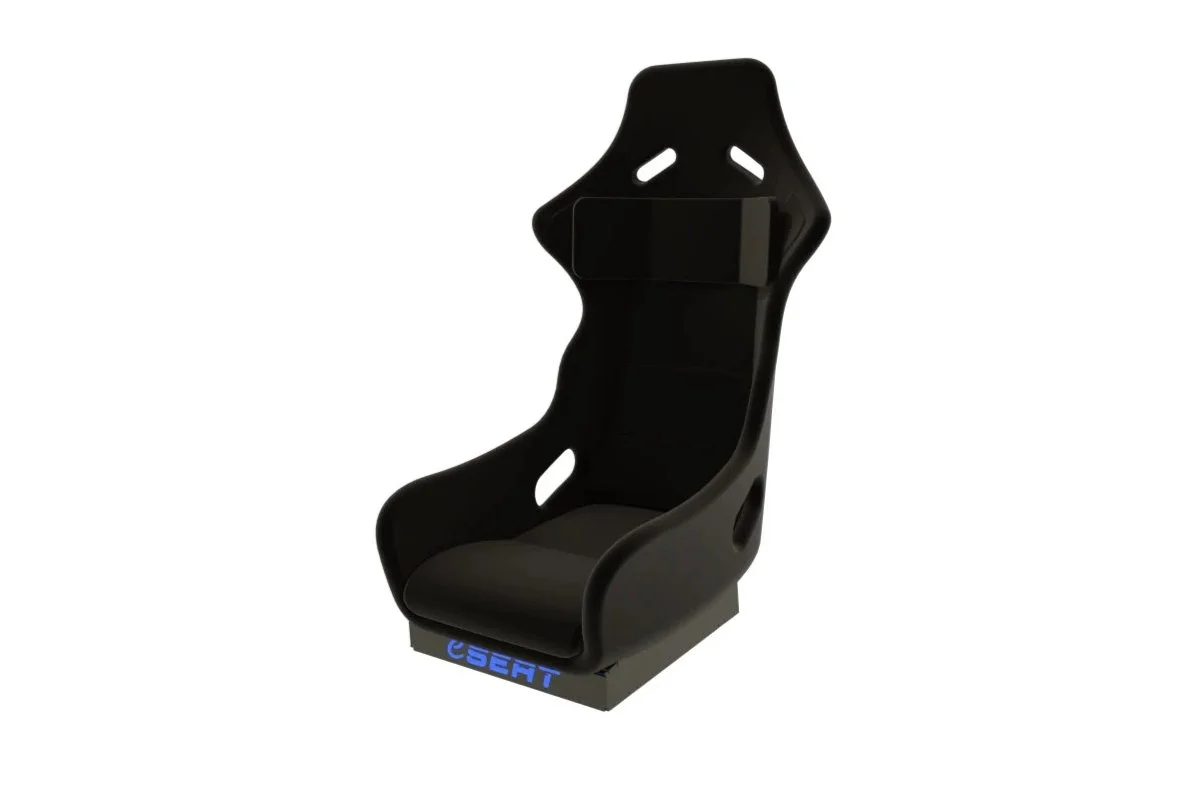
A seat mover is a motion actuator system that replaces or sits beneath your existing sim racing seat. Your seat is mounted to the mover, which responds to game data and tilts, rotates and shifts the seat while the rest of your cockpit — your wheel, pedals, monitor and frame — remains completely stationary.
When the car brakes, your seat tilts forward while your wheel stays fixed. When you corner, your seat leans while your pedals stay level. The disconnect between where your body is and where your hands and feet are is the fundamental characteristic of seat mover motion.
Full-frame platforms
A full-frame motion platform sits beneath the entire cockpit assembly. Your rig — frame, seat, wheel mount, pedal plate, any monitor mounts — is bolted to the platform, which becomes the base. When the platform moves, everything moves together. Your hands, feet, seat and body all shift as a single unit.
When the car brakes, you lean forward relative to the platform along with your wheel and pedals. Your relative position within the cockpit does not change — only your position relative to the external world changes. This is how it works in a real car.
The Motion Feel — What the Difference Is Like
This is the central question and the answer has nuance.
Seat mover feel
A seat mover delivers tangible, immediate motion feedback. The first time you feel your seat tilt under braking or lean through a corner, the upgrade from a static setup is obvious. For many sim racers, this first experience of physical motion is compelling enough that the question of seat mover vs full-frame feels less important than they expected.
However, the disconnect between a moving seat and fixed controls introduces a perceptual conflict for some users. In a real car, your whole body — including your arms and hands on the wheel — moves under g-forces. On a seat mover, your body tilts while your arms extend to a wheel that has not moved. Over time, some users adapt to this and find it completely natural. Others find it persistently odd and feel the feedback is not cohesive enough to fully immerse them.
Seat movers also have a known association with motion sickness in a subset of users — the mismatch between visual information (stationary wheel and cockpit), vestibular information (tilting seat) and proprioceptive information (arms at a different angle to where the body expects) is the likely mechanism. Most users adapt, but it is worth being aware of.
Full-frame platform feel
On a full-frame platform, the entire cockpit moves as a single unit. Your hands remain in the same position relative to your seat and body. The visual environment (monitor or VR) moves in synchrony with the physical motion. The result is a more cohesive, self-consistent experience that more closely replicates what happens in a real car.
The motion quality on a well-tuned full-frame platform is generally considered more convincing and less prone to perceptual conflict than a seat mover. The traction loss axis in a 3DOF full-frame platform — where the whole cockpit rotates to simulate rear-end movement — is particularly effective because your entire body, including your hands on the wheel, participates in the motion.
Full-frame platforms are also more compatible with VR, where the full-body coherence of the motion is especially important for avoiding simulation sickness.
Integration with Your Existing Rig
Seat mover integration
Seat movers are designed to integrate with existing cockpits. The seat is removed from the cockpit's seat frame, mounted to the mover, and the mover is either attached to the cockpit or sits independently beneath it. In most cases, the rest of the cockpit — wheel, pedals, monitors — can remain in place.
This makes a seat mover the lowest-disruption entry point to motion simulation. You are not replacing your rig, you are adding to it.
The main integration consideration is whether your cockpit's seat mounting point is compatible with the seat mover's mounting system. Most popular cockpit designs accommodate standard seat mover configurations, but check before purchasing.
Full-frame platform integration
A full-frame platform requires building a new setup on the platform, or transferring your existing cockpit frame onto it. Your cockpit frame, seat, wheel mount and pedals all need to be assembled on or transferred to the platform base.
For sim racers with an existing static rig, this is more disruptive than a seat mover installation. For those starting from scratch or willing to rebuild, it is no more complex than any other cockpit assembly — and the long-term result is a more complete setup.
Cost Comparison
Seat movers are generally less expensive than full-frame platforms at equivalent DOF levels. DOF Reality's seat mover range starts below the cost of their full-frame H3, making them the more accessible entry point.
The relevant cost question is not just the platform purchase price but the total setup cost. If you already have a quality cockpit, a seat mover adds motion at lower cost than replacing the full setup with a platform and new frame. If you are starting from scratch, a full-frame platform may be more cost-effective as a combined purchase.
View the full DOF Reality range at SimTorque including seat movers →
[ https://simtorque.co.uk/collections/dof-reality ]
Space Requirements
Seat movers add relatively little to the footprint of an existing cockpit — the motion happens within the space the seat already occupies, with some additional clearance required for the range of movement.
Full-frame platforms have a larger footprint than the static cockpit they replace. The platform base extends beyond the cockpit frame and requires clearance for the range of motion around all sides. Measure your available space before choosing a full-frame platform.
Who Should Start with a Seat Mover?
A seat mover is the right starting point if:
• You are uncertain whether motion simulation will suit you and want to test it before a larger investment
• You have a quality existing cockpit you want to retain without rebuilding
• Budget is a constraint and you want motion experience now with a view to upgrading later
• Your available space is limited and a full-frame platform footprint is not workable
• You primarily run simulations where the seat mover's limitations (fixed wheel and pedals) are less relevant
Who Should Go Straight to a Full-Frame Platform?
A full-frame platform is the right choice if:
• You are confident that motion simulation is what you want and this is a considered long-term purchase
• You are building a new setup rather than modifying an existing one
• You plan to use VR, where full-body motion coherence matters most
• You want the 3DOF traction loss experience at its most effective — the yaw axis is significantly more convincing on a full-frame platform than on a seat mover
• Long-term, you want the best possible motion experience and are making that investment once
Our Recommendation
For sim racers who are certain about wanting motion simulation, a full-frame 3DOF platform is the right long-term choice and it is worth going directly to it rather than through a seat mover stage.
For sim racers who are genuinely uncertain, a seat mover is a sensible first step that lets you experience motion feedback without the full investment of a complete platform build.
Both types are available from SimTorque, including the DOF Reality seat mover range and the full-frame H3 and H6 platforms.
View the DOF Reality range at SimTorque →
[ https://simtorque.co.uk/collections/dof-reality ]
FAQ
Can you upgrade from a seat mover to a full-frame platform?
Yes — a seat mover is not a dead end. When you are ready for a full-frame platform, the seat mover is removed and the new platform takes its place. The cockpit components remain usable.
Do seat movers cause more motion sickness than full-frame platforms?
Seat movers have a higher reported rate of motion sickness among users due to the perceptual conflict between a moving seat and fixed controls. Full-frame platforms create a more self-consistent experience that most users find easier to adapt to. Neither type should cause lasting issues — most users adapt with gradual exposure.
Which type works better with VR?
Full-frame platforms are generally better for VR users. The coherence between full-body physical motion and the visual environment in VR reduces simulation sickness risk and improves the quality of the experience.
Are seat movers available with traction loss (3DOF)?
Yes — DOF Reality produces seat movers with traction loss. However, the traction loss experience on a seat mover is generally considered less convincing than on a full-frame 3DOF platform because only the seat rotates while the wheel and pedals remain stationary.
Is free UK delivery available on seat movers from SimTorque?
Yes — all motion platforms including seat movers come with free UK delivery from SimTorque.